
Targeted treatments. Personalized to you.
Understanding the source of your pain is an important step toward finding the right treatment. At Epic Pain Management, we offer procedures designed to help evaluate pain conditions, reduce discomfort, and improve mobility and quality of life. Your care team will discuss your options and recommend an approach based on your diagnosis, medical history, symptoms, and personal goals.
Every Procedure We Offer
Epidural Steroid Injection (ESI)
An epidural steroid injection delivers anti-inflammatory medication into the space around the spinal nerves. It may help relieve pain caused by irritated nerves, including pain that travels from the neck into an arm or from the lower back into a leg.
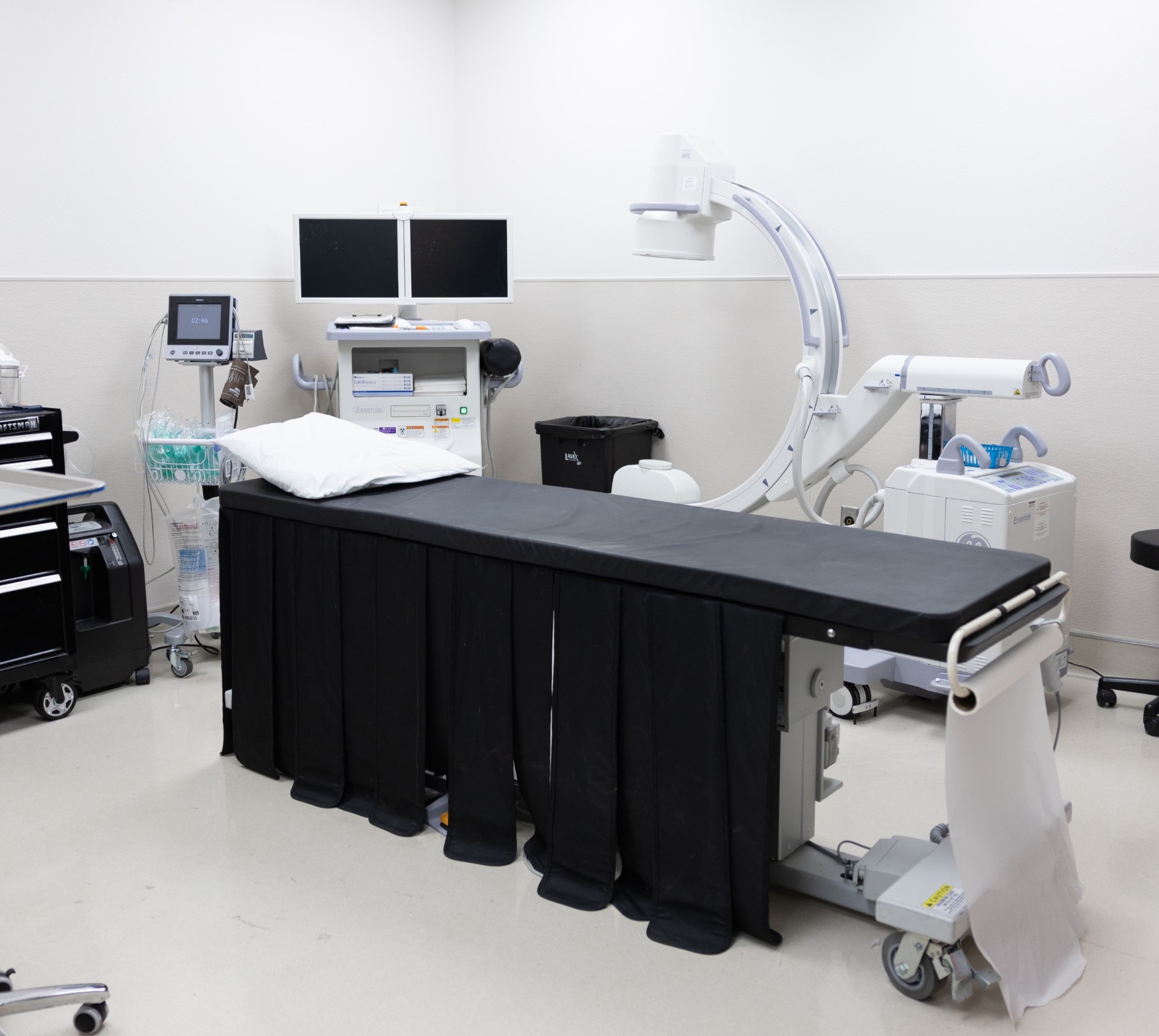
Your physician uses live X-ray imaging to guide the injection. The approach depends on the location of your symptoms and your spinal anatomy:
- Interlaminar: Medication is delivered between the bones at the back of the spine to reach a broader area.
- Transforaminal: Medication is delivered near a specific nerve root for a more targeted approach.
- Caudal: Medication enters through an opening near the base of the spine to reach nerves in the lower back.
Relief varies from person to person. Your response helps guide the next steps in your treatment plan.
Medial Branch Block (MBB)
A medial branch block helps answer an important question: Is your pain coming from the facet joints in your spine?
Your physician uses imaging guidance to inject a small amount of numbing medication near the nerves that carry pain signals from these joints. You’ll track how your pain changes while the medication is working.
If you experience meaningful temporary relief, your physician may recommend another diagnostic block or discuss radiofrequency ablation as a next step.
Radiofrequency Ablation (RFA)
Radiofrequency ablation, or RFA, uses targeted heat to interrupt pain signals from specific nerves. It may be an option for certain types of neck, back, or joint pain.
Your physician uses imaging guidance to position a specialized needle near the targeted nerve. Radiofrequency energy heats a small area of nerve tissue to reduce its ability to send pain signals.
For spinal facet joint pain, diagnostic medial branch blocks help determine whether RFA may be appropriate. Relief can last several months or longer, although nerves can recover and pain may return. Your physician will help determine whether repeat treatment makes sense for you.
VIA Disc NP®
Spinal discs help cushion the bones in your spine. As discs degenerate, they can lose tissue and contribute to lower back pain. VIA Disc NP is an injectable donor-tissue allograft intended to supplement lost disc tissue and support the disc’s cushioning function.
Your physician uses live X-ray guidance to deliver the tissue into the center of the affected disc through a specialized needle.
Your physician will review your symptoms, imaging, and previous treatments to determine whether this approach fits your needs. Results vary, and your care team will explain the potential benefits, risks, and recovery.
Trigger Point Injections
Tight bands of muscle, commonly called trigger points or muscle knots, can cause pain where they form or refer discomfort to nearby areas. Trigger point injections target these sensitive areas to help relieve muscle pain and improve comfort and movement.
Your clinician identifies the affected muscle and uses a small needle to inject medication directly into the trigger point. Treatment may be combined with stretching, physical therapy, or other care to address contributing muscle tension and movement patterns.
Peripheral Nerve Blocks
A peripheral nerve block delivers medication near a specific nerve outside the brain and spinal cord. Depending on the condition being treated, it may help reduce pain, temporarily interrupt pain signals, or help determine whether a particular nerve is contributing to your symptoms.
Your clinician selects the nerve based on your symptoms and examination and may use imaging guidance to help position the needle accurately. Depending on the area being treated, nerve blocks may include:
- Head and scalp pain: Occipital nerve blocks.
- Shoulder pain: Suprascapular nerve blocks.
- Outer thigh pain: Lateral femoral cutaneous nerve blocks.
- Rib or chest-wall pain: Intercostal nerve blocks.
- Groin or lower abdominalpain: Ilioinguinal or iliohypogastric nerve blocks.
Relief may be temporary or longer-lasting, depending on the condition and treatment. Your response may also help guide additional treatment options.
Sympathetic Nerve & Plexus Blocks
The sympathetic nervous system is part of the body's automatic nervous system and helps regulate functions such as circulation and certain responses to stress. In some conditions, these nerves may contribute to persistent pain. Sympathetic nerve and plexus blocks may help manage selected types of limb, abdominal, or pelvic pain.
Your physician uses imaging guidance to place medication near a specific nerve center or network. Depending on your condition, options may include:
- Stellate ganglion blocks: May be used for selected pain conditions affecting the head, neck, or upper extremities, including certain cases of complex regional pain syndrome.
- Lumbar sympathetic blocks: May be used for selected pain conditions affecting the lower extremities, including certain cases of complex regional pain syndrome.
- Celiac plexus blocks: May help manage certain types of persistent upper abdominal pain.
- Superior hypogastric plexusblocks: May help manage certain types of persistent pelvic pain.
The type of block recommended depends on your diagnosis, symptoms, and treatment goals.
Joint & Bursa Injections
Joint pain can make everyday activities and simple movements difficult. Targeted injections may help reduce inflammation and pain in areas such as the knees, shoulders, and hips. Injections may also be used to treat an irritated bursa, a small fluid-filled sac that cushions and protects tissues around a joint.
Your physician delivers medication into the affected joint or bursa. Ultrasound or X-ray guidance may be used, depending on the location and procedure.
- Corticosteroid injections: Help reduce inflammation and related pain.
- Local anesthetic injections: Temporarily numb an area and may help determine whether a particular joint or structure is contributing to your pain.
Your physician will explain which option is appropriate for your diagnosis and what results you can reasonably expect.
Epidural Steroid Injection (ESI)
An epidural steroid injection delivers anti-inflammatory medication into the space around the spinal nerves. It may help relieve pain caused by irritated nerves, including pain that travels from the neck into an arm or from the lower back into a leg.
Your physician uses X-ray guidance (fluoroscopy) to help position the needle accurately. The approach depends on your symptoms, diagnosis, and spinal anatomy:
- Interlaminar: Medication is delivered into the epidural space between the bones at the back of the spine, where it can reach nearby spinal nerves.
- Transforaminal: Medication is delivered near the opening where a specific spinal nerve exits the spine for a more targeted approach.
- Caudal: Medication is delivered into the epidural space through an opening near the base of the spine.
The amount and duration of relief vary from person to person. Your response will help your physician determine the appropriate next steps in your treatment plan.
Facet Joint Injections
Facet joints are small joints located along the back of your spine that help provide stability and allow you to bend and twist. Arthritis, inflammation, or irritation in these joints may contribute to neck or back pain.
Using imaging guidance, your physician places medication directly into the affected facet joint. The injection may include a local anesthetic, a corticosteroid, or both. It may help evaluate whether the facet joint is contributing to your pain and may provide temporary relief.
Medial Branch Block (MBB)
A medial branch block helps determine whether the facet joints along the back of your spine may be contributing to your neck or back pain.
Your physician uses imaging guidance to inject a small amount of numbing medication near the medial branch nerves. These nerves carry pain signals from the facet joints to the brain.
After the procedure, you will be asked to monitor and record your pain levels while the medication is working. If you experience significant temporary relief, this may indicate that the facet joints are contributing to your pain.
Based on your response and applicable clinical criteria, your physician may recommend an additional diagnostic block or discuss radiofrequency ablation (RFA), a procedure that uses heat to interrupt pain signals from the targeted nerves.
Radiofrequency Ablation (RFA)
Radiofrequency ablation uses targeted heat to interrupt pain signals from specific nerves. It may be an option for certain types of neck, back, or joint pain, particularly pain related to the facet joints.
Your physician uses imaging guidance to position a specialized needle near the targeted nerve. Radiofrequency energy heats a small area of nerve tissue to reduce its ability to transmit pain signals.
For spinal facet joint pain, diagnostic medial branch blocks are generally used to help determine whether RFA may be appropriate. Relief may last several months or longer, although the nerves can recover and pain may return. Your physician will discuss whether repeat treatment may be appropriate.
Sacroiliac (SI) Joint Injections
The sacroiliac, or SI, joints connect your lower spine to your pelvis. Irritation in these joints can contribute to lower back, buttock, or pelvic-area pain.
Using imaging guidance, your physician injects medication into the affected joint. The injection may include a local anesthetic, often with a corticosteroid. Your response may help determine whether the SI joint is contributing to your symptoms and may provide pain relief.
Vertebroplasty & Kyphoplasty
Compression fractures occur when a bone in the spine weakens and collapses. For selected patients with painful fractures, vertebroplasty or kyphoplasty may help stabilize the bone and reduce pain.
Using imaging guidance, your physician injects medication into the affected joint. The injection may include a local anesthetic, often with a corticosteroid. Your response may help determine whether the SI joint is contributing to your symptoms and may provide pain relief.
- Vertebroplasty: Using imaging guidance, your physician injects medical-grade bone cement into the fractured vertebra.
- Kyphoplasty: A small balloon is inserted and inflated inside the fractured vertebra to create a space before cement is placed. This may also restore some of the bone's lost height.
Your physician will review your imaging, symptoms, and previous treatments to determine whether either procedure is appropriate for you.
Minimally Invasive Lumbar Decompression (MILD)
Lumbar spinal stenosis is a narrowing of the spinal canal in the lower back. When a thickened ligament contributes to that narrowing, it can place pressure on nerves and make standing or walking uncomfortable.
The MILD procedure may be an option for selected patients whose symptoms have not improved enough with conservative treatments, such as medication or physical therapy.
Through a small opening in the skin, your physician uses X-ray guidance and specialized instruments to remove small amounts of thickened ligament and, when needed, small portions of bone. This creates more space for the affected nerves without placing a spinal implant.
The procedure is generally performed on an outpatient basis. The type of anesthesia or sedation used depends on your individual circumstances. Many patients return home the same day. Recovery and improvement vary, and your care team will explain when you can resume your usual activities.
VIA Disc NP®
Spinal discs help cushion the bones in your spine. As discs degenerate, they can lose tissue and may contribute to lower back pain. VIA Disc NP is an injectable donor-tissue allograft intended to supplement disc tissue. It is designed to support the disc's cushioning function.
Your physician uses X-ray guidance to deliver the allograft into the center of the targeted disc through a specialized needle.
our physician will review your symptoms, imaging, and previous treatments to determine whether this approach may be appropriate for you. Results vary. Your care team will discuss potential benefits, risks, limitations, and recovery.
Percutaneous Disc Decompression
Percutaneous disc decompression removes a small amount of material from inside a spinal disc through a small opening in the skin. It may be considered for selected disc conditions that cause nerve-related pain, such as sciatica.
Your physician uses imaging guidance to position a specialized instrument within the disc and remove a small amount of disc material. The goal is to reduce pressure within the disc and, in appropriate cases, help relieve pressure on a nearby nerve.
Your physician will review your symptoms, imaging, and previous treatments to determine whether this procedure is appropriate and explain its potential benefits, limitations, and recovery.
Peripheral Nerve Stimulation (PNS)
Peripheral nerve stimulation targets specific nerves outside the brain and spinal cord to help manage persistent pain. It may be an option when treatments such as medication, physical therapy, or injections haven’t provided enough relief.
Your physician uses imaging guidance to place a thin wire, called a lead, near the targeted nerve. The lead connects to a small device that delivers gentle electrical pulses intended to change how pain signals are transmitted.
Depending on your condition and the system selected, treatment may involve a temporary device or a longer-term implant. Your physician will explain the recommended approach and how you will evaluate its effect on your pain and daily activities.
Spinal Cord Stimulation (SCS)
Spinal cord stimulation uses a small device to deliver electrical pulses that change how pain signals are transmitted. It may be considered for certain types of persistent nerve pain when other treatments have not provided enough relief.
Treatment begins with a temporary trial. Thin wires, called leads, are placed near the spinal cord and connected to an external device. Over several days, you’ll evaluate how stimulation affects your pain and daily activities.
If the trial provides meaningful benefit, you and your physician may decide whether to proceed with an implanted system. Stimulation settings can be adjusted to your needs, and some systems are designed to provide therapy without a tingling sensation.
Platelet-Rich Plasma (PRP) Injections
Platelet-rich plasma, or PRP, uses a concentrated portion of your own blood as a treatment option for selected tendon and joint conditions. Platelets contain growth factors involved in the body's natural healing response.
A small blood sample is collected and processed to concentrate the platelets. Your physician then injects the preparation into the targeted area, using imaging guidance when appropriate.
PRP may help improve pain and function for some conditions. Evidence and results vary depending on the condition being treated, and improvement, when it occurs, may develop gradually.
Exosome Therapy
Exosomes are microscopic particles released by cells that carry signals between them. Researchers are studying their potential medical uses, including possible applications related to inflammation and tissue repair.
Exosome treatments for pain remain investigational. The FDA has not approved exosome products to treat pain conditions, and their safety and effectiveness for these uses have not been established. Patients should discuss the investigational status, potential risks, and available alternatives with their physician.
A treatment plan that looks beyond procedures.
Your care may include medication, movement-based therapies, or a combination of approaches. We tailor our recommendations to your symptoms, daily challenges, and treatment goals.
Medication Management
Medication may be one part of your pain management plan. Your clinician reviews your symptoms, health history, and current medications to determine which options may be appropriate.
Follow-up visits help evaluate how your medication is working, monitor side effects, and make adjustments when needed. The goal is to support pain relief and daily function with thoughtful, ongoing care.
Physical Therapy & Rehabilitation
Building strength, improving mobility, and returning to daily activities can be important parts of managing pain. When appropriate, we may refer you to an external physical therapy or rehabilitation provider for care tailored to your needs.
Your therapy plan may focus on movement, flexibility, strength, and strategies to help you function more comfortably.
Chiropractic Care
For some patients, chiropractic care may complement a pain management plan. Your clinician will consider your condition and, when appropriate, may recommend a referral to an external chiropractic provider.
We’ll help you understand how this option may fit alongside your other treatments.
Advanced spine care. The Epic way.
For selected spine conditions, endoscopic surgery offers a minimally invasive approach to addressing the source of nerve compression. Dr. Shahrukh Bengali will review your symptoms, imaging, and previous treatments to determine whether this approach fits your needs.
Explore our endoscopic spine surgery options and learn what to expect before, during, and after your procedure.
Let’s find the right approach for your pain.
You don’t have to choose a procedure on your own. Our team will help you understand your symptoms and discuss treatment options that may fit your needs.